

Early Methane Detection.
Long Term Assurance.
Serinus™ is a biological methane sensor designed for continuous, low-cost monitoring of abandoned, suspended, and orphaned wells.
The Challenge
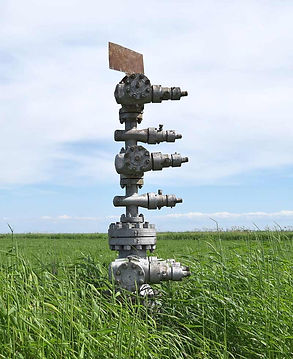
Across North America, millions of abandoned and suspended wells remain in the ground. Emissions from these wells are believed to be significantly underestimated, with leakage rates varying widely depending on region and well type.
Methane is approximately 20 times more potent than CO₂ and responsible for roughly 30% of global warming. At the same time, mineral rights holders retain long-term liability for well integrity — even after abandonment.
Current methane monitoring methods are largely reactive. Satellites, aircraft, and ground systems can detect emissions — but often only at higher thresholds, with significant capital and operating costs. Some fixed-point systems require substantial installation investment.
The result: leaks are often assumed absent until visible failure or major emission events occur.
Industry needs a more proactive, cost-effective solution.

The Serinus Solution
Serinus™ is a low-cost, passive, long-term biological methane sensor.
At the core of the system is a specially engineered bacterial biosensor. When exposed to methane, the organism awakens and generates a measurable response. That response is detected and transmitted via radio signal to a cellular or other communications system.
Key features include:
-
Highly sensitive detection — down to approximately 1 gram/hour
-
Detection at concentrations as low as 1000 ppm
-
Low energy, long-life operation
-
Autonomous function — install and monitor remotely
-
Low-cost deployment
-
Easy installation with no ongoing technical support required
Serinus is designed to be installed and largely forgotten — until it proactively alerts you to an emergent emissions event.

Passive Monitoring
The biosensor remains dormant until methane is present.

Biological Activation
Exposure to methane triggers a biological response.

Signal Transmission
The system transmits a radio signal through cellular or other communication networks.

Actionable Awareness
Operators receive early quantitative indication of methane presence — enabling timely, lower-cost response.
How It Works
Designed for Real-World Deployment
Serinus is engineered to perform across a wide range of environmental conditions and is adaptable for:
-
Abandoned wells
-
Suspended wells
-
Orphaned wells
-
Observation wells
-
Thermal production environments
The system supports both site-specific deployment and regional monitoring strategies.

Why It Matters
Serinus provides:
-
Long-term management assurance
-
Improved regulatory compliance confidence
-
Reduced environmental and safety risk
-
Earlier detection of emergent leaks
-
Strengthened public trust
Rather than relying solely on periodic surveys or high-cost monitoring networks, Serinus enables continuous, site-specific oversight — turning methane monitoring from reactive detection into proactive risk management.